
Tutorial 1 - How to Create a Drawing
The basis for every masterpiece

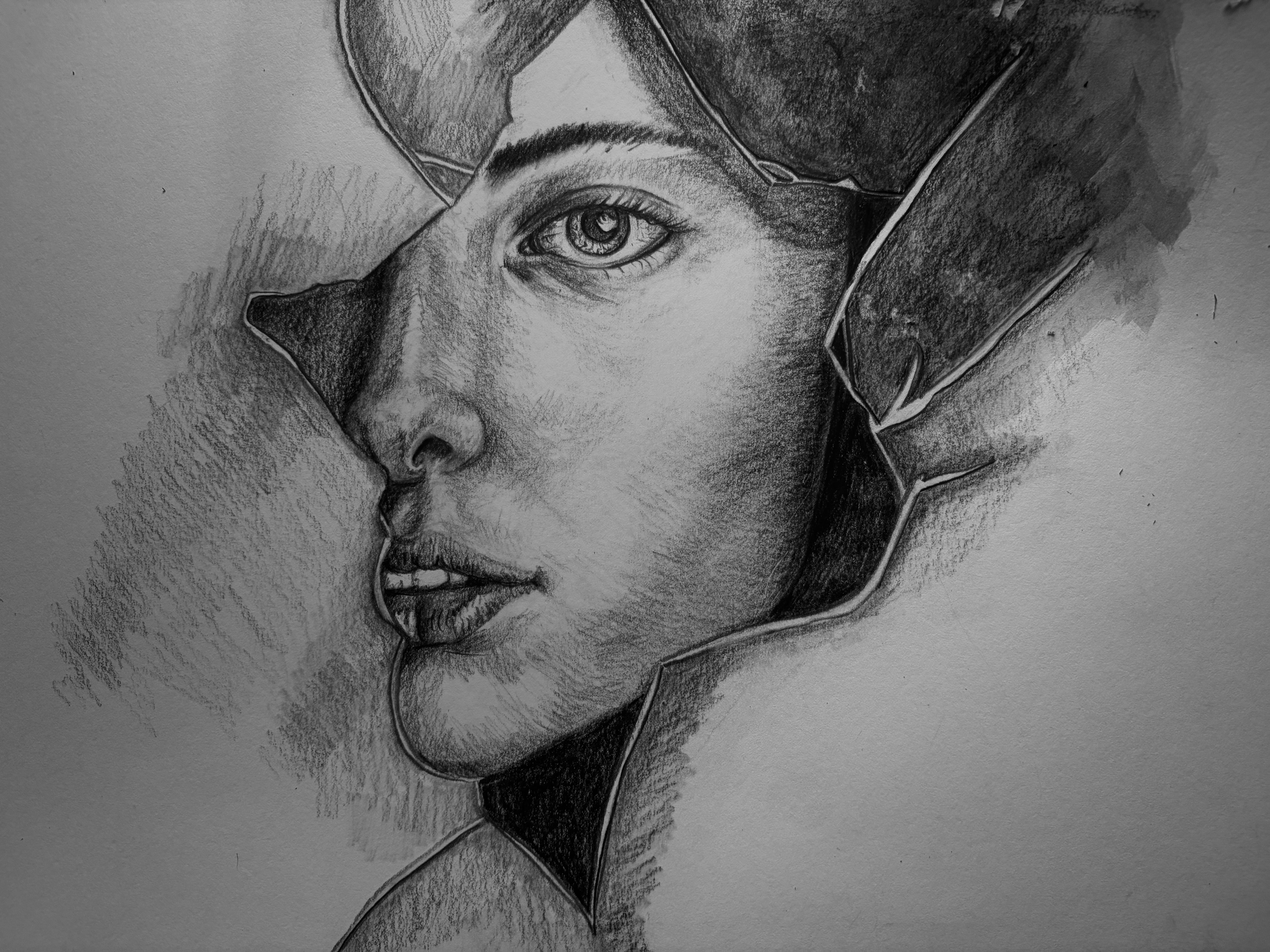
Should you learn how to draw? If so, why?
As AI is replacing most jobs, there has never been a better time to learn how to become an artist. Creativity is perhaps the only sector that will remain untouched by technological developments.
Hardly anyone will be excited to book a ticket for a museum with AI-generated images. It would feel soulless and uncanny. Unlike machines, human ingenuity is ensouled with a unique consciousness. Our DNA sequence is one of a kind, and as a result, so is everything we create. AI cannot replace human creativity because our being is inimitable and our time frame unrepeatable. One of my favorite quotes is, “No one shall erase you from the memory of time.”
However, there is a deeper reason to learn to create art, which is borne not only by those who enjoy the creations, the spectator gifted with those works of excellence from mankind, but the creator itself (you). Creation represents the apex of human potential because it requires a God-given ability. It is our best chance at emulating our ultimate creator. Nothing makes us feel more fulfilled than leaving our own unique imprint. A lapse into divinity, our creations are what remain in this world after we leave it. Art provides us with a peek into eternity itself.
When I first started drawing, I was surprised to see how many individuals were in admiration at something that took a few minutes or a few hours and wasn’t particularly impressive. It’s because we are naturally inspired by creativity, and because we are seeing less of it. I felt like I was offering something that transcended the temporal and that made me feel less concerned about everything material around me. When you create, time stops. It’s the true essence of Western meditation, which is historically focused on forging our surroundings rather than subtracting ourselves from them.
I’ll get into some drawing details now as an initial guide, the basis of any great work of art.
When you see a drawing, the first aspect you naturally notice is the details. That’s what makes us “in awe”. But the details are the last, and arguably easiest part of any drawing (or painting, which also requires a base drawing). Seeing detailed drawings makes us think that details are where we need to focus to start, and that couldn’t be further from the truth. Details do show how talented or meticulous someone may be at art. But you don’t have to be a master at details to be an artist (and I say this as someone who loves to focus on details). Let me explain why.
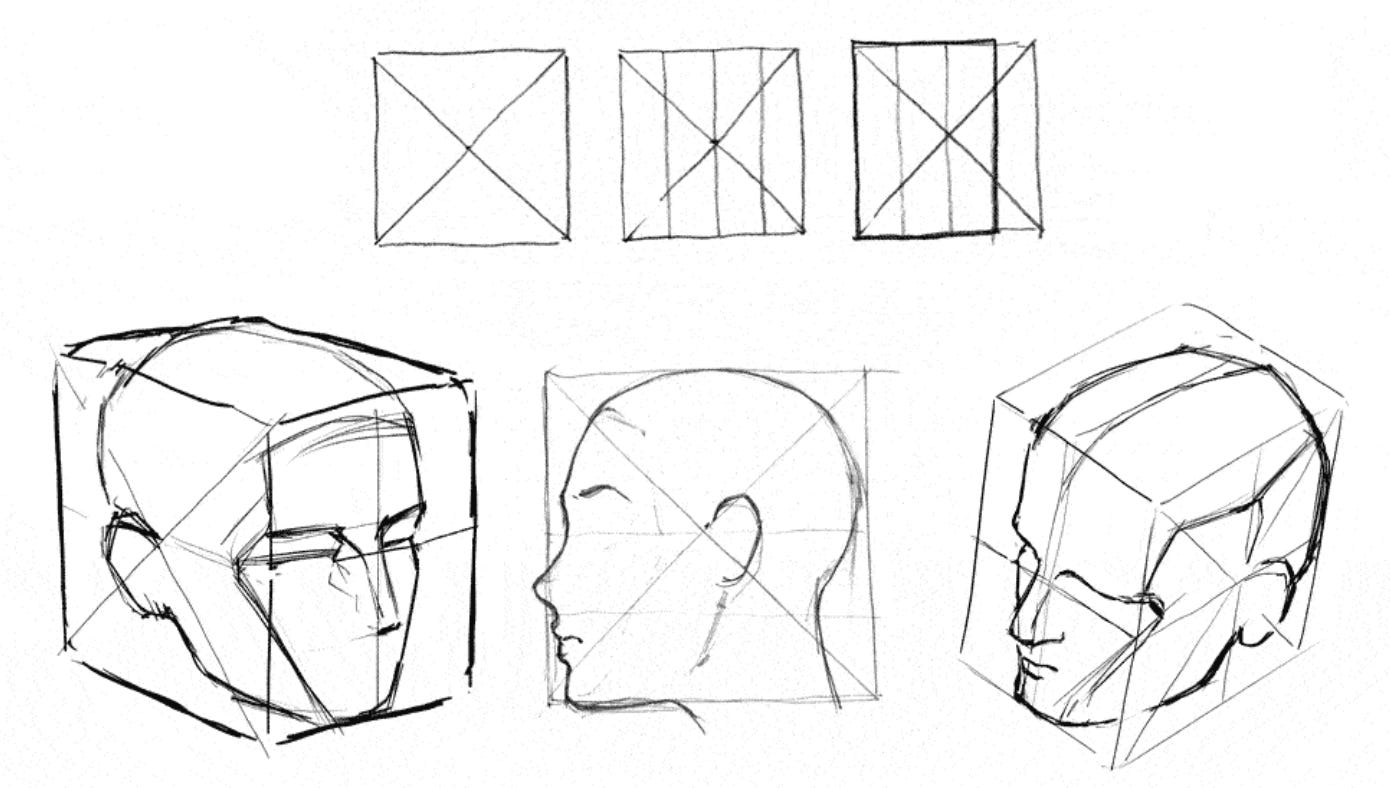
The first part that’s most important about drawing is the geometrical structure; without this foundation, nothing else will work - you will keep banging your head against the wall, focusing on the details and realizing you’re getting nowhere. Simple, initial geometry is where you understand the intricate logic behind God’s designs, and it makes the rest of the drawing flow effortlessly. It’s purely mathematical; even our anatomy is geometrical. Everything you see in the world is. However imperfect it may seem, there is a logical structure behind it, largely composed of spheres, cubes, and rectangular prisms.
Here is an example of Bridgemen’s head construction anatomy through a cube:
The second part is about the shadows vs. the lights, otherwise known as the value (rather than the color). Where you cast the shadows and lights is where you start to see the drawing come to life through three-dimensionality. The Renaissance masters used a technique called tratteggio - small lines, rather than shade, that create a sense of dimension on the drawing. Here’s an example by Leonardo Da Vinci:
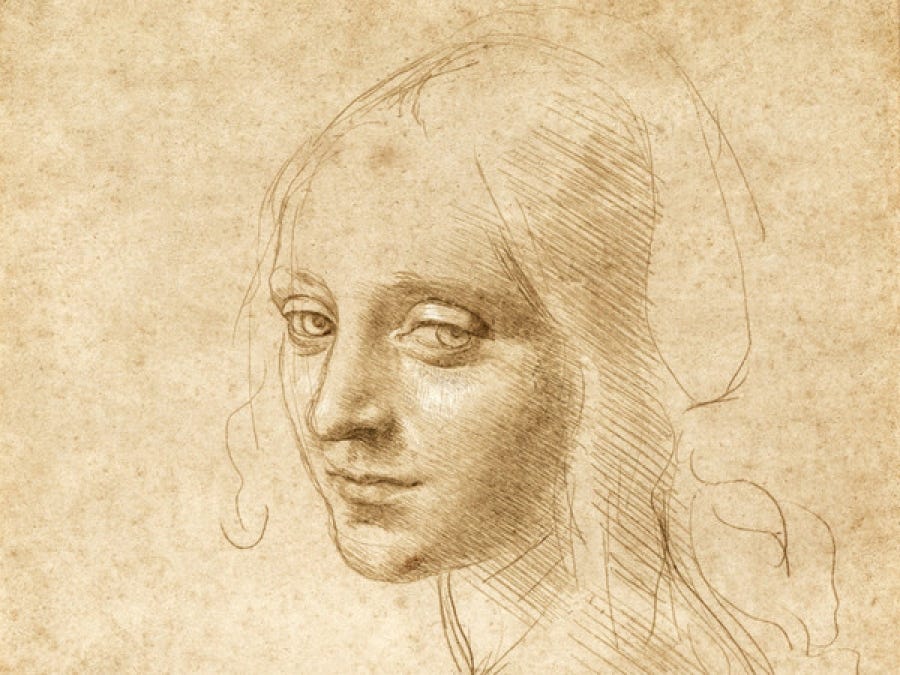
Lines are the most elementary part of geometry after the dot. Lines define a drawing with the direction they take. They are termed as cross-hatching (superior to most tutorials that teach you “smudging”). Lines sculpt the body of a drawing. They are also necessary to understand the direction of your brushstrokes when painting. For example, if you look at the lines in Leonardo’s drawing, they follow the shape of the cheeks, the nose, etc., by adapting to the natural shape of those features, and by changing intensity and length. Notice that these are not pencil shades, but specific lines that form an incision into the drawing to sculpt it.
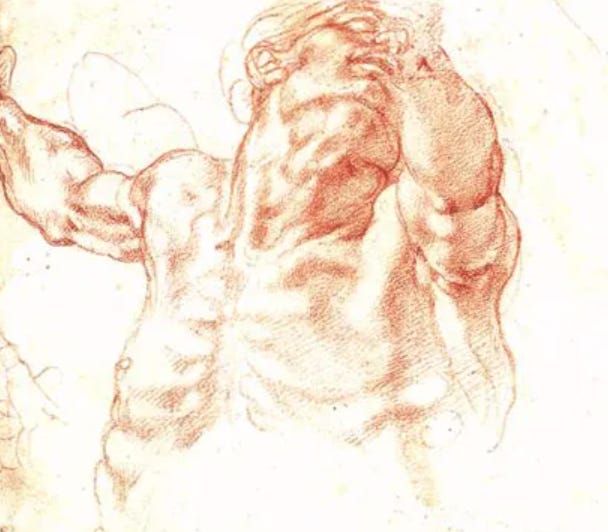
The shade can be added towards the end to create a sense of softness as the lines blend, but not before. The direction of the lines is more important - and can be sufficient. It depends on what outcome you’re looking for. Here is Michelangelo’s use of cross-hatching. Unlike Leonardo, he changes the direction of the lines depending on the area and uses some shading at the end:
It’s important to note that everyone has their unique style. You don’t need to be like the great masters of the past, because you’re your own person - they’re useful as a guide to get started, and to understand the philosophy behind their methods to find yours. Even Picasso started as a great figurative drawer before finding his unusual, non-traditional style.
I make my drawings, for example, by using that crosshatching method, but I draw more instinctually. I use some final blending. I even use water with a paintbrush to add variety towards the end, as I did in the drawing featured at the top of this tutorial.
If you’ve felt a creative side missing in your life, this is a great opportunity to learn how to give life to it. I’d be honored to show you how by using knowledge from a modern-Renaissance academy in Milan, studies of the great masters of the past, art workshops I attended from my favorite figurative artists of today, and some personal lessons I learned along the way.
You don’t need much except for your own mind, a few pencils, and a piece of paper. However, you most likely need guidance, and that is a hard lesson I learned myself as someone who thought she was above the theoretical side of things. The internet offers many video tutorials, but they are often quick, face-value guides rather than a deeper dive into the meaning of each gesture. If you can understand the why, the how becomes infinitely easier.
For a step-by-step guide, upgrade below. You will find:
Where to find the right kind of quality materials for your drawing: pencils, paper, etc.
How to start your drawing and finish it in detail, from the geometry to the crosshatching.
Explanations and tips from the greatest (including yours truly!).
If you’re interested in receiving one-on-one lessons with me and other art benefits, consider the Founding Member option.